Re-architecting a Fragmented National Member Platform
5 MIN READ
Taking a fragmented national platform — 12+ subdomains, 3 separate apps — and giving it coherent architecture, a shared design language, and a rebuilt mobile foundation.
UX Strategy • Information Architecture • Design Systems • Mobile App Redesign • Accessibility • Agile Delivery


FRAGMENTED
UNIFIED
SUBDOMAINS RESTRUCTURED
12+ → 5
APP REBUILD
90 days
IMPLEMENTED ACROSS WEB & MOBILE
Design
System
Legacy State: Fragmented Information Architecture
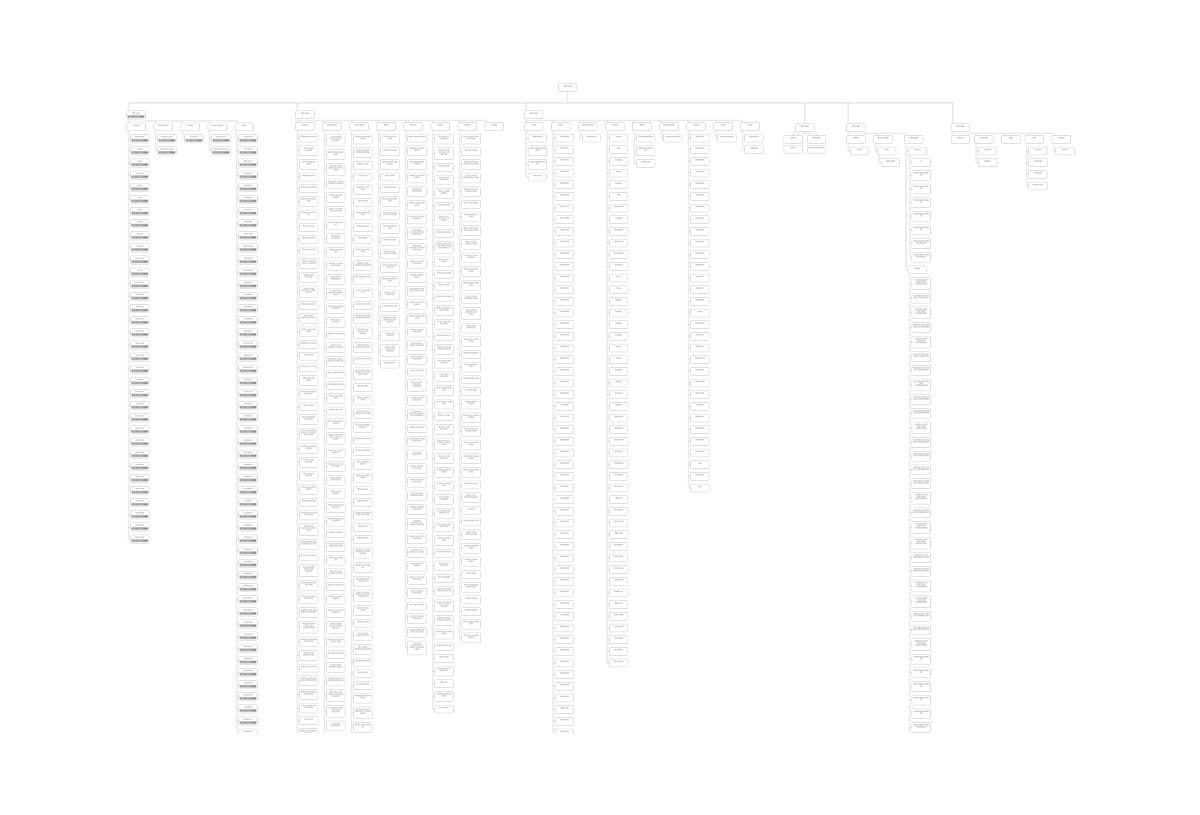
Legacy sitemap illustrating uncontrolled depth, duplicated taxonomy, and fragmented subdomain governance.
The legacy ecosystem comprised 12 loosely connected subdomains, unmanaged long-tail content structures, and auto-generated taxonomy patterns. Depth frequently exceeded meaningful navigation thresholds, resulting in duplication, SEO dilution, and user disorientation.
Role: UX & Product Design Lead | Team: CTO • 2 Developers • Client Stakeholders | Timeline: July 2024 - July 2025 (Design System & Platform Re-Architecture) | Mobile Rebuild: October 2024 - January 2025 | Platforms: Web Ecosystem • Mobile App (MAUI)
A Platform Built for a Different Era
This organisation had been serving its membership for decades. What began as a tight-knit community had grown into a national digital ecosystem — but the platform hadn't grown with it.
By the time I came on board, the infrastructure had been patched and extended so many times that it had become functionally unmeasurable. Google Analytics data was unreliable, corrupted by duplicated content, broken tracking and structural inconsistencies that had accumulated across years. The team couldn't identify what was working, what wasn't, or where members were dropping off. One fix rarely carried through to the next environment. Broken links, duplicated journeys and contradictory information had become the norm.
Beneath the technical debt sat a more complex organisational reality. This was a membership body navigating genuine existential pressure — a declining and ageing member base, increasing competition from well-resourced commercial alternatives offering more polished products and better functioning apps, and an internal governance structure resistant to the kind of change needed to stay relevant.
“If we don’t change what we’re doing, I might as well pack up and go home.”
Design couldn't solve all of that. But it could build the foundations that a more modern, sustainable platform would need to stand on.
Work on the design system commenced in July 2024 as a foundational initiative to stabilise the broader ecosystem. The mobile rebuild began in October 2024, driven in part by the imminent end of Xamarin support, and launched in January 2025, while web consolidation work continued beyond launch.
Sole Design Authority Across a Fractured Ecosystem
I was appointed as the sole UX and Design Lead to drive the platform re-architecture and mobile redesign, collaborating with two developers and a CTO within an Agile delivery environment.
I led:
Ecosystem-wide Information Architecture (IA) mapping
UX audit continuation and prioritisation
Accessibility alignment (WCAG 2.1 AA targets)
Design system creation and tokenisation
Component library development in Figma
Cross-platform UX alignment
Mobile app UX/UI redesign
Subscription onboarding and conversion flow design
You Can’t Fix What You Can’t Measure
This was not a visual refresh.
The core challenge was delivering structural clarity and scalable UX foundations while:
Consolidating 12 fragmented subdomains
Supporting an active database migration
Rebuilding the mobile app from scratch
Operating under a compressed three-month launch window
Working within a small, under-resourced product team
The ecosystem needed improved usability, stronger design governance, and a commercially viable subscription-ready experience.
Reducing 12 Subdomains to a Coherent Foundation
I began with ecosystem-level IA mapping, auditing cross-domain navigation, taxonomy, and user journeys to identify duplication and breakdowns.
This informed:
Simplified navigation systems
Clearer content hierarchy
Cross-platform UX alignment
Subdomain consolidation logic
Improved discoverability and task completion flows
The result was a clearer structural foundation capable of supporting future growth and productisation.
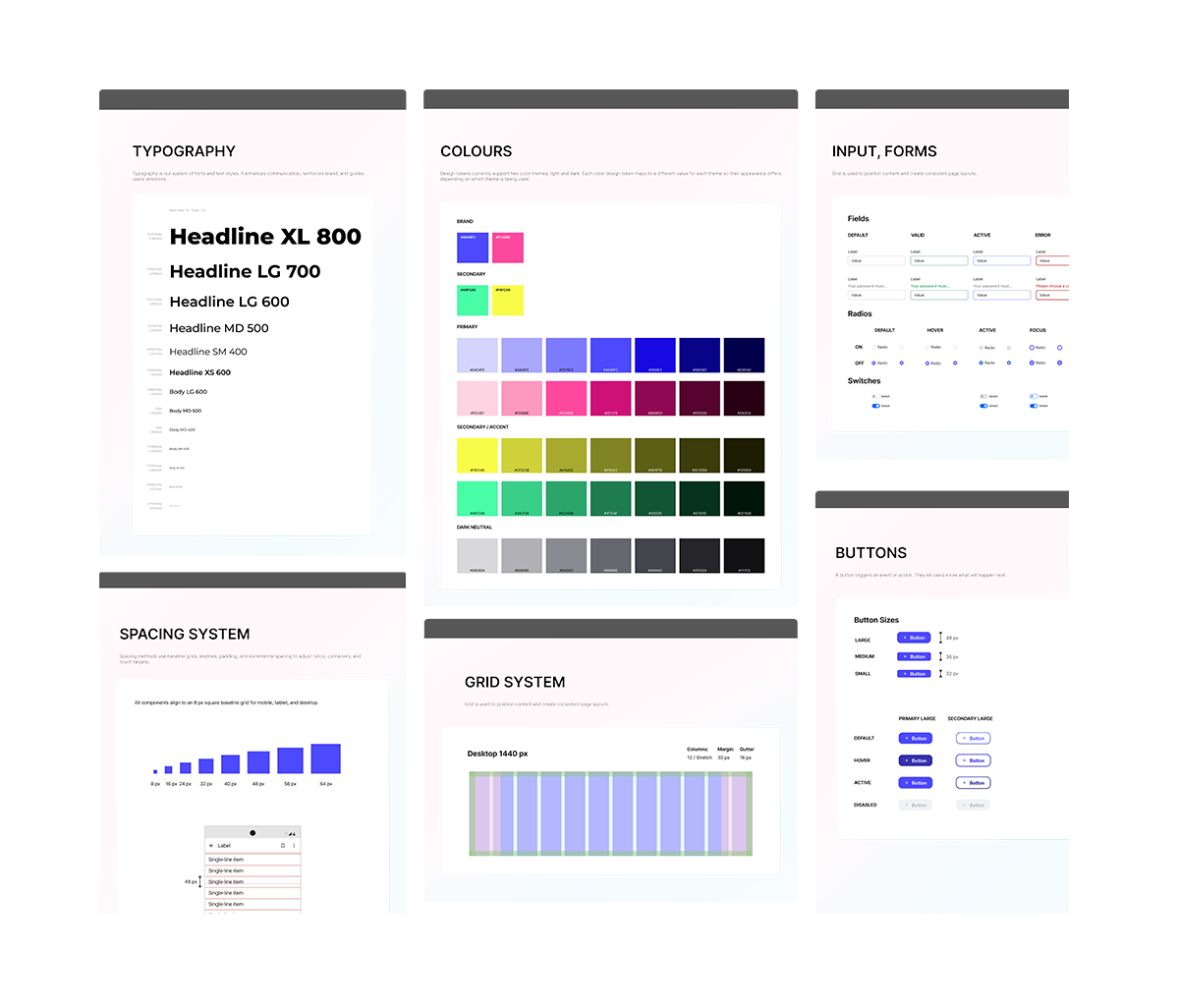
Design system foundations board displaying typography hierarchy, spacing scale, and reusable UI component structure for scalable product delivery.
Building the Shared Language the Platform Never Had
I built the design system in parallel with the IA restructure, establishing shared foundations before any screen-level design began. The sequencing was deliberate, since without a shared token and component base, the mobile rebuild and web consolidation would have produced two different products.
This informed:
Tokenised colour, typography and spacing scales,
Component library across web and mobile surfaces,
Multi-brand architecture supporting distinct brand experiences within one system,
WCAG 2.1 AA accessibility standards applied at component level, not retrofitted.
The system was actively shaping delivery at launch and was later adopted as the foundation for a subsequent app rebuild, demonstrating scalability beyond the original brief.
From Legacy App to Subscription-Ready Product in 90 Days
In parallel with ecosystem consolidation, I led the complete redesign and supported the rebuild of the legacy mobile travel app, migrating from Xamarin to MAUI ahead of Xamarin’s end of framework support. With an ageing app losing users to competitors, the rebuild was non-negotiable and a hard-deadline set.
Within a 90-day delivery window, I:
Reimagined onboarding and navigation flows
Simplified filtering, search, and map integration
Redesigned saved locations and trip planning workflows
Designed for constrained travel environments (signal variability, glare, remote use)
Integrated free-trial and subscription onboarding flows
Prototypes were delivered in rapid cycles, often working in parallel with development. Priorities evolved through daily stand-ups and weekly reviews, enabling continuous forward momentum without formal beta testing.
Foundations Laid, Momentum Established
Quantitative metrics from this engagement remain confidential. What can be said is that the work shifted the platform from a state of structural opacity to one of measurable, navigable foundations.
Observable improvements at the point of handover included clearer UX logic across web and mobile touchpoints, reduced design ambiguity and significantly improved design-to-development handoff, improved accessibility alignment toward WCAG 2.1 AA targets, and early adoption of shared UI patterns across both product and marketing channels.
The mobile app launched as a subscription-ready product within the three-month delivery window. The design system was actively shaping delivery at launch, with web consolidation continuing beyond the mobile release.
The platform didn't finish transforming when I left. That was always the honest expectation. What it had — for the first time — was a shared design language, a restructured information architecture, and a rebuilt mobile product capable of supporting what came next.
When the Design Problem is Bigger Than the Design
This engagement taught me something that no brief can prepare you for: sometimes the design problem is a proxy for a deeper organisational one.
The platform was fractured because the decisions that shaped it had been made incrementally, without a shared vision, under competing pressures that design alone couldn't resolve. My role wasn't to fix everything, it was to introduce enough structural clarity that the organisation could, if it chose to, begin moving differently.
That distinction matters. Scalable foundations are only valuable if the organisation is ready to build on them. Part of the work in an environment like this is reading that gap accurately and knowing when to push for the right solution and when to deliver the best possible version of what the constraints allow.
Leading both ecosystem consolidation and a mobile rebuild in parallel, under significant time and resource pressure, reinforced something I return to often: clarity introduced early compounds. A design system built in early pays dividends down the track. An IA decision made with future scale in mind quietly shapes every product decision that follows.
It remains one of the most complex and instructive engagements of my practice.
This case study covers three of five primary workstreams from a 16-month embedded engagement. Additional work included a member app restructure, booking platform UX and brand strategy, and ongoing design system expansion across the product suite.
*Due to confidentiality, selected visuals and artefacts have been simplified or reconstructed for portfolio purposes.