E-Commerce & Information Architecture Transformation
5 MIN READ
Defining the structural foundation for a national B2B supplier’s transition from legacy B2B operations to a scalable e-commerce platform.
Information Architecture • E-Commerce Strategy • Behavioural Insight Conversion Design • B2B Product Experience

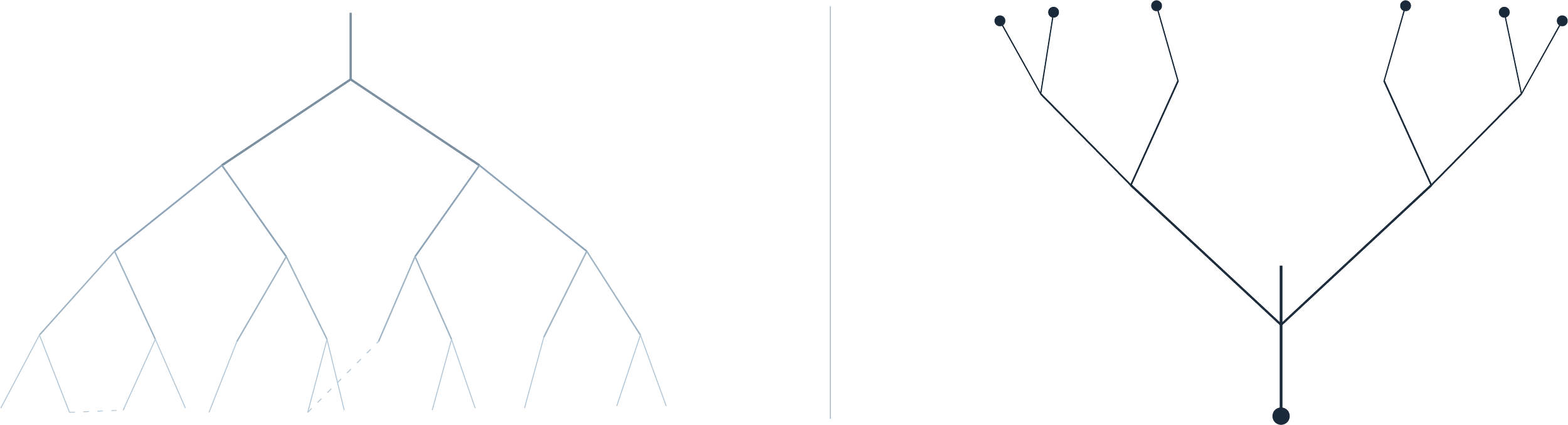
ENTANGLED
STRUCTURED GROWTH
2 sectors
CONSTRUCTION • AGRICULTURE
Legacy → Scale
CORE TRANSFORMATION
STRATEGY DELIVERY
~ 6 weeks
Role: Product Design & UX Strategy Lead | Team: Head of Marketing • Internal Stakeholders • External Dev Agency | Platform: Web & Mobile (B2B E-Commerce Transition)
Context
TKV Group, one of Australia’s largest suppliers of construction and agricultural parts, was preparing to evolve beyond a legacy B2B web presence toward a more scalable e-commerce model.
At the time, the business relied heavily on manual quoting and call centre workflows. Online purchasing capability was limited, competitors were already e-commerce enabled, and two distinct customer sectors — agriculture (80%) and construction (20%) — were operating under a single domain with little structural separation.
The website functioned primarily as a brochure. It was not yet a product platform.
TKV Group engaged me to provide strategic direction and establish the architectural foundation required for digital transformation.
My Role
As Product Design & UX Strategy Lead, I was responsible for defining the digital structure required to support e-commerce growth.
This included:
Conducting a heuristic usability audit using Nielsen’s principles
Analysing behavioural data via Google Analytics to identify exit points and drop-off patterns
Mapping a scalable sitemap and subdomain structure
Designing annotated wireframes for core page types
Integrating conversion and trust mechanics into layout proposals
Presenting findings and recommendations to senior marketing leadership
The engagement culminated in an executive-ready strategy report used to guide next-stage implementation.
The Challenge
The issue was not visual design.
It was structural and commercial.
The existing site lacked:
A scalable information architecture capable of supporting a product catalogue
Clear segmentation between customer divisions
Strong trust signals for technical buyers
Behavioural insight informing navigation and content hierarchy
A content management structure to support targeted marketing
Operationally, quote requests and enquiries were routed through manual workflows, creating bottlenecks and increasing labour costs. A more efficient self-service model was needed, without compromising technical trust.
What I delivered
1.Behavioural & Structural Audit
I combined heuristic evaluation with analytics review to understand how users navigated the existing site.
This revealed:
Ambiguous navigation pathways between divisions
High exit rates from category entry points
Limited reinforcement of credibility for specialised inventory
Device-level friction patterns impacting mobile users
These insights informed a restructuring of the site’s taxonomy and user flow logic.
2.Information Architecture Redesign
To support both commercial growth and internal governance, I proposed:
A subdomain split separating construction and agriculture
Clear division landing pages tailored to sector-specific needs
A scalable category hierarchy aligned with future product catalogue expansion
Centralised shared content (support, blog, policies) to reduce duplication
This shift created clarity for customers and simplified future platform expansion.
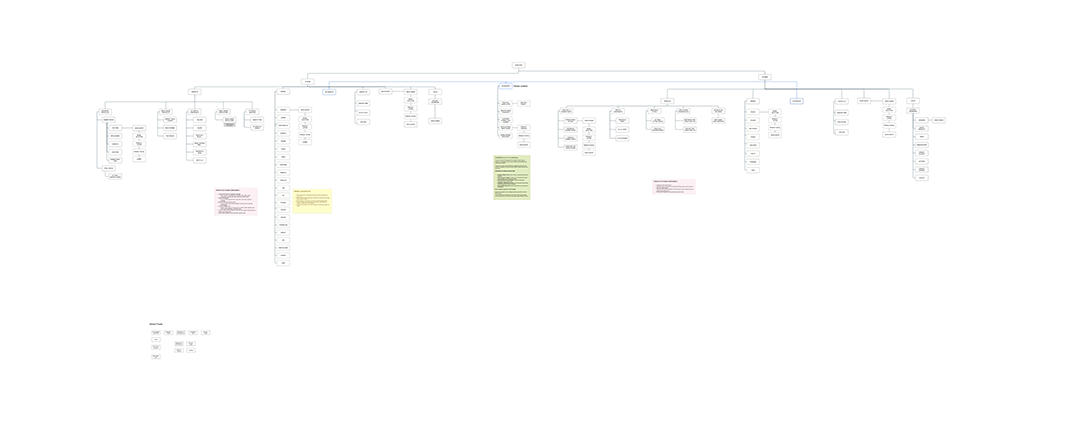
Proposed information architecture separating agriculture and construction into distinct subdomains while centralising shared content to support scalable e-commerce governance.
3. Conversion & Trust Design
High-level wireframes were developed for:
Homepage
Division landing pages
Product category structures
Lead generation and account creation zones
Layouts were structured to:
Surface technical support early
Reinforce credibility through trust cues
Reduce friction in quote requests
Gradually introduce e-commerce functionality
Rather than redesigning the interface cosmetically, the focus was on enabling task completion and long-term scalability.
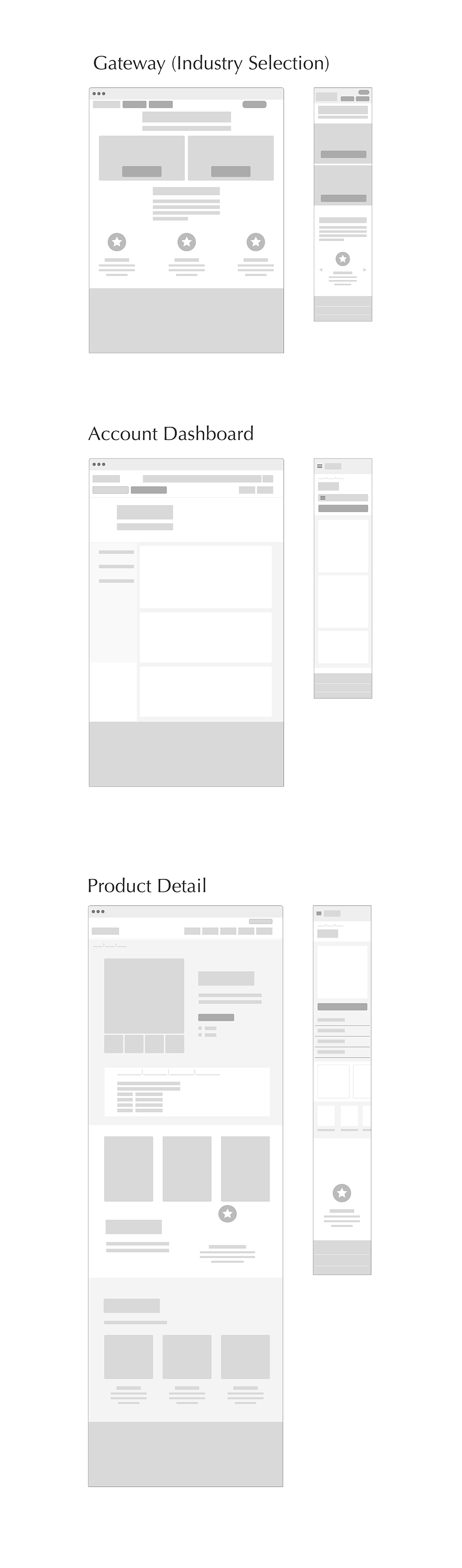
Core platform templates designed to support segmentation, account-based purchasing, and scalable product discovery across desktop and mobile.
Results
A comprehensive UX & IA strategy report was delivered to executive stakeholders, forming the foundation for platform redevelopment.
While implementation extended beyond the engagement period, immediate impact included:
Executive-level alignment on digital transformation direction
Clear architectural roadmap for e-commerce enablement
Structured separation of divisions to support balanced growth
Reduced ambiguity for the incoming development agency
The engagement reframed TKV’s website from a static presence to a structured digital product capable of supporting future commerce.
Strategic UX & IA report consolidating behavioural insights, structural redesign, and commercial readiness into a single executive artefact.
Reflection
This engagement reinforced the importance of structural clarity before visual refinement. The core challenge was not aesthetic, it was architectural. By separating divisions, clarifying taxonomy, and introducing scalable account-based workflows, the platform moved closer to commercial maturity.
While implementation extended beyond my involvement, the strategic foundation — from information architecture through to CRM-enabled account management — provided a clear pathway for e-commerce enablement and operational efficiency.
This project strengthened my conviction that effective product design in B2B environments is as much about governance, segmentation, and behavioural logic as it is about interface execution.
*Selected artefacts have been simplified for portfolio presentation.